By Analyst Team · Updated 2026-07-24 · 12 min read
How does IPTV work? In simple terms, Internet Protocol Television (IPTV) delivers television content over your internet connection instead of through traditional terrestrial, satellite, or cable formats. Unlike streaming services like Netflix that offer on-demand content only, how does IPTV work on smart TVs and other devices involves a live broadcast element combined with a massive library of on-demand shows. This complete guide breaks down the technology, compares it to cable, explains setup steps, and answers whether is IPTV legal in the US — so you can decide if it's the right TV solution for your household.
What You'll Learn in This Guide
- The exact technology behind how does IPTV work on smart TVs and Firesticks
- A step-by-step breakdown of signal delivery from broadcaster to your screen
- Honest comparison: IPTV vs cable which is better for pricing, channels, and reliability
- Practical setup guide for how to set up IPTV on Firestick in under 10 minutes
- Legal considerations and how to find a reliable IPTV subscription
- Proven IPTV buffering fix guide to improve your viewing experience
What is IPTV Exactly?
IPTV stands for Internet Protocol Television. Instead of broadcasting signals through radio waves (antenna) or sending them through coaxial cables (cable TV), how does IPTV work by encoding video content into IP packets and transmitting them over your broadband internet connection. This is the same technology that powers YouTube Live, but for traditional television channels.
There are three main types of IPTV services: Live Television (real-time broadcasts of sports, news, and entertainment channels), Video on Demand (VOD) (movies and TV shows you can watch anytime), and Time-Shifted Media (catch-up TV that lets you watch shows you missed). Many premium providers combine all three into one package, which is why the best IPTV service for live sports often includes a 50,000+ VOD library alongside 20,000+ live channels.
The key difference from Netflix or Hulu? IPTV delivers live linear channels — the same experience as flipping through cable channels — plus on-demand content. This dual nature makes it a true cable replacement rather than just another streaming service.
How Does IPTV Work Step by Step?
Understanding how does IPTV work requires looking at the journey from broadcaster to your screen. Here is the exact technical flow in plain English:
1. Content Acquisition
The IPTV provider first acquires television channels and video content from broadcasters, studios, and content distributors. This happens through legitimate licensing agreements (for legal services) or unauthorized streams (for illegal services). The content is received via satellite feeds, fiber optic links, or direct file transfers.
2. Encoding and Transcoding
Raw video signals are converted into digital formats using encoders. The video gets compressed into efficient codecs like H.264 or H.265 (HEVC). This compression is critical — a single HD channel requires about 5-8 Mbps, while 4K needs 25-35 Mbps. High-quality how does IPTV work systems use adaptive bitrate encoding, creating multiple quality versions of each channel so your device can switch seamlessly between resolutions based on your internet speed.
3. Streaming Server Distribution
The encoded content is uploaded to powerful streaming servers. These servers are typically located in data centers around the world. When you select a channel, the server sends a continuous stream of IP packets to your device. The best IPTV service for live sports invests heavily in server infrastructure to minimize latency — live sports can't buffer for 10 seconds without ruining the experience.
4. Content Delivery Network (CDN) Acceleration
To reduce buffering and improve speed, reputable IPTV services use CDNs. A CDN caches content on servers physically closer to you. If you're in Chicago and the main server is in Amsterdam, a CDN node in Chicago delivers the video. This dramatically reduces latency and buffering — a critical factor in any IPTV buffering fix guide.
5. End-User Device and Player Application
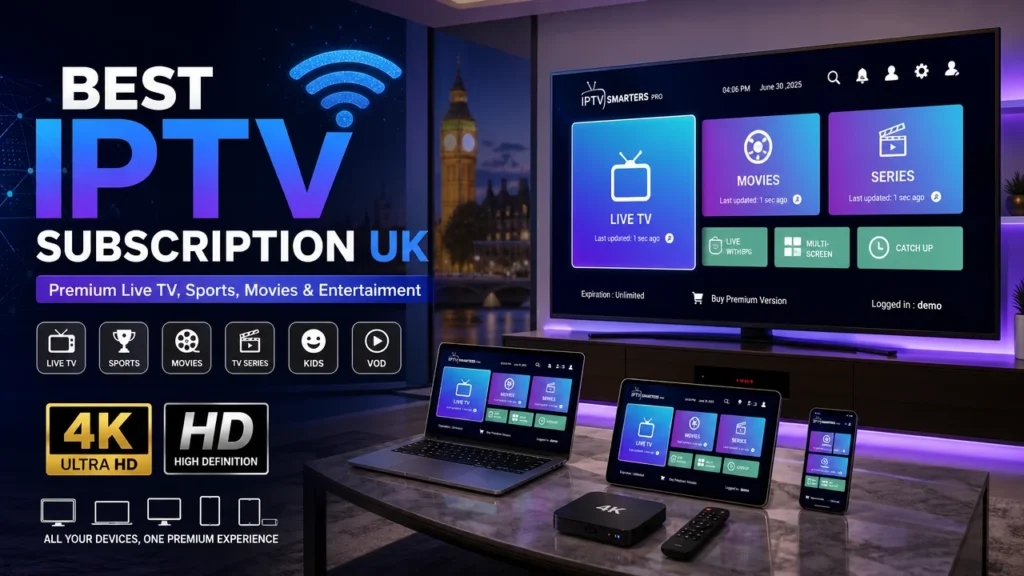
On your end, you need two things: an internet connection and a device with an IPTV player app. How to set up IPTV on Firestick involves installing a player app like TiviMate, IPTV Smarters, or XCIPTV. This player app receives the IP packets from the server, decodes them back into video, and displays them on your screen. The player also handles the Electronic Program Guide (EPG) — the interactive channel schedule you scroll through.
Concrete Benefits of IPTV for Users
Switching from cable to IPTV isn't just about saving money — though that's a major factor. Here are the real-world advantages that explain IPTV vs cable which is better from a user perspective:
- Massive channel selection — Most premium IPTV providers offer 15,000 to 25,000 live channels compared to cable's typical 200-500. This includes international channels from every continent.
- Cost savings of 60-80% — A quality reliable IPTV subscription costs $10-$20 per month versus $80-$150 for comparable cable packages.
- Watch on any device — IPTV works on smart TVs, Firesticks, Android boxes, smartphones, tablets, and computers. How does IPTV work on smart TV is particularly seamless — most modern smart TVs can run IPTV apps natively.
- Massive VOD libraries — Access to 60,000+ movies and TV series on demand, often including 4K and HDR content.
- No contracts or cancellation fees — Most IPTV services operate on a month-to-month basis. You can cancel anytime without penalties.
- Multi-device and multi-room support — One subscription often covers 3-5 devices simultaneously, meaning the whole family watches different channels.
- Catch-up TV and recording — Pause live TV, rewind, and record shows to watch later (depends on the provider and player app).
LIMITED TIME AVAILABILITY
Unlock Full IPTV Access Today
Experience premium live TV, sports, and on-demand movies with zero buffering. Lock in your pricing model today before plans return to standard regional metrics.
Honest Limitations You Should Know
No technology is perfect. Before purchasing any reliable IPTV subscription, understand these real limitations:
⚠ Drawbacks
- Requires stable high-speed internet (25+ Mbps minimum)
- Buffering during peak hours on overloaded servers
- Legal gray area — many providers operate without proper licensing
- Technical know-how needed for initial setup
- Channel availability changes frequently (channel churn)
- No 911 emergency service access (VoIP not included)
- Customer support quality varies wildly between providers
✓ How to Mitigate
- Use wired ethernet connection instead of WiFi
- Choose providers with dedicated servers and CDN support
- Only subscribe to verified legal IPTV services with clear terms
- Watch setup tutorials; most take 5-10 minutes
- Pick established providers with 3+ years in operation
- Keep a backup streaming service for essential content
- Read IPTV review Reddit 2025 threads for real user experiences
IPTV vs Cable: Honest Comparison
Let's settle the IPTV vs cable which is better debate with a direct comparison. This table covers the factors that matter most to the average viewer:
| Factor | IPTV | Cable TV | Winner |
|---|---|---|---|
| Monthly Cost | $10 - $25 | $80 - $200 | IPTV |
| Channel Count | 15,000 - 25,000 | 200 - 500 | IPTV |
| Video Quality | HD, FHD, 4K (dependent on internet) | HD, 4K (consistent but limited channels) | Tie |
| Reliability | Moderate (buffering possible) | Very High (no buffering) | Cable |
| Device Flexibility | Smart TV, Firestick, Phone, PC, Tablet | TV only (set-top box) | IPTV |
| Contract Required | No (month-to-month) | Yes (12-24 months) | IPTV |
| On-Demand Library | 50,000+ movies & shows | Limited (depends on package) | IPTV |
| International Channels | Extensive (200+ countries) | Limited to select packages | IPTV |
| Legal Certainty | Gray area (varies by provider) | Fully legal and regulated | Cable |
The verdict? If you want absolute reliability and don't mind paying a premium, cable wins. If you want massive channel selection, multi-device support, and major cost savings, IPTV is the clear choice. Many users now combine a basic cable package for essential news and weather with a premium IPTV service for sports and international content.
Who Is IPTV Best For?
Based on thousands of IPTV review Reddit 2025 threads and user surveys, here are the specific profiles that benefit most from IPTV:
- Cord-cutters on a budget — If you're tired of $150 monthly cable bills, IPTV slashes your TV expenses by 70-80%.
- Sports enthusiasts — The best IPTV service for live sports offers every major league (NFL, NBA, MLB, NHL, Premier League, Champions League, UFC) plus niche sports like cricket and rugby — often cheaper than a single sports cable package.
- International households — Immigrants and expats who want TV from their home country. IPTV provides channels from India, Philippines, Mexico, Brazil, Arab countries, and virtually every other nation.
- Travelers and digital nomads — Take your TV subscription anywhere with an internet connection. No regional restrictions if you choose the right provider.
- Tech-savvy users — If you're comfortable installing apps and configuring basic settings, you'll have no trouble with how to set up IPTV on Firestick.
- Large families — Multiple device connections mean everyone watches their own content on different TVs and tablets simultaneously.
How to Get Started: 7 Practical Steps
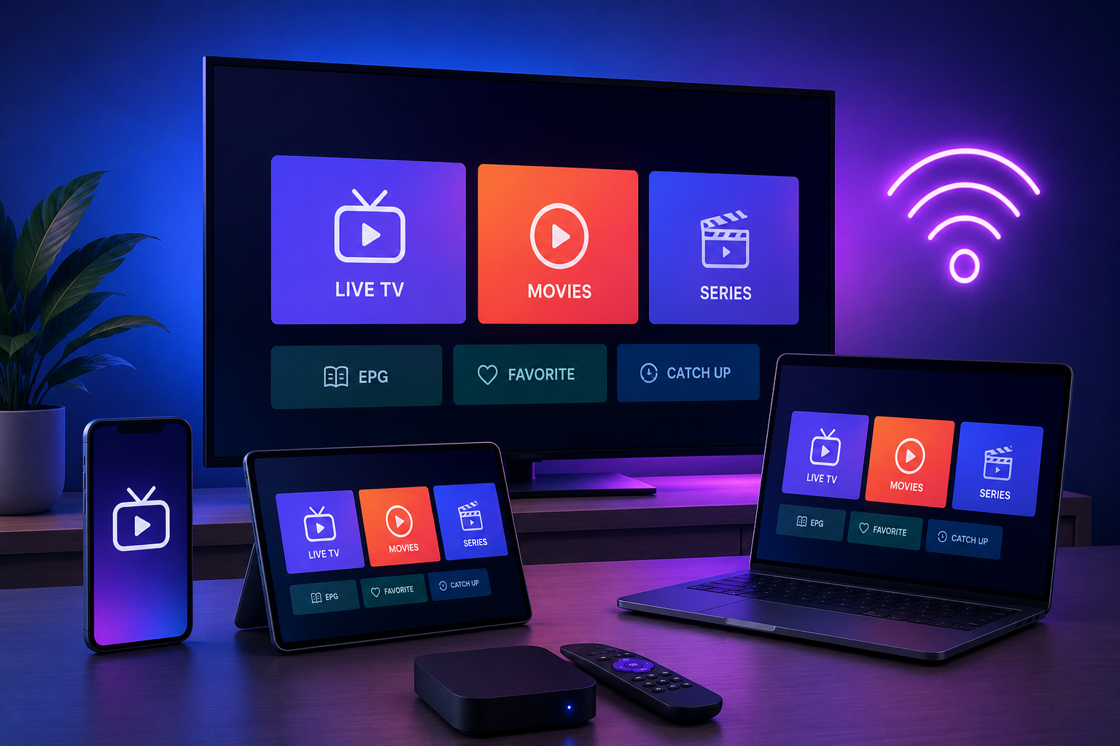
Ready to set up IPTV? Follow this numbered guide for a smooth experience. Whether you need how to set up IPTV on Firestick or on a smart TV, the process is similar across devices.
- Check your internet speed — Run a speed test at speedtest.net. You need at least 25 Mbps for HD streaming and 50 Mbps for 4K. Wired ethernet connections always outperform WiFi.
- Choose a reliable IPTV provider — Research extensively. Read IPTV review Reddit 2025 threads, check reviews on Trustpilot, and look for providers with trial options. A reliable IPTV subscription should offer a 24-hour trial for $2-$3 so you can test before committing.
- Select your device — Decide whether you'll use a smart TV (native Android TVs work best), Firestick (most popular), Android TV box, or mobile device. For smart TVs, search your TV's app store for IPTV player apps.
- Install an IPTV player app — On Firestick, go to Settings > My Fire TV > Developer Options > Install Unknown Apps (turn ON). Then download Downloader app from Amazon App Store. Use Downloader to install TiviMate or IPTV Smarters.
- Enter your subscription details — Open the player app. You'll need to enter credentials from your provider: a username/password or a playlist URL (M3U link). The provider sends these details after purchase.
- Configure the EPG (Electronic Program Guide) — Most IPTV player apps auto-load the channel guide if your provider includes an EPG URL. If not, manually enter the EPG link provided by your service.
- Test and optimize — Watch several channels, especially live sports. If you experience buffering, refer to our IPTV buffering fix guide below. Adjust video output to match your TV's native resolution.
Secure special promotional rates instantly before the window closes. Our verified provider offers 24-hour trials and dedicated sports servers.
Activate Your IPTV Subscription Now →IPTV Buffering Fix Guide
Buffering ruins the IPTV experience. Here's a practical IPTV buffering fix guide with solutions that actually work:
- Switch to wired ethernet — This single change eliminates 80% of buffering issues. WiFi interference from neighbors, walls, and other devices causes packet loss.
- Lower video output resolution — In your IPTV player settings, change from 4K or 1080p60 to 720p or 1080p30. This reduces bandwidth requirements by 50-70%.
- Use a VPN — Some ISPs throttle IPTV traffic. A VPN encrypts your connection and prevents throttling. Choose a VPN with servers near your IPTV provider's servers.
- Clear app cache — In Firestick Settings > Applications > Manage Installed Applications > [Your IPTV App] > Clear Cache. Do this weekly.
- Change video player — Some IPTV player apps handle streams better than others. Try switching between TiviMate, IPTV Smarters, OTT Navigator, and XCIPTV.
- Reduce simultaneous connections — If you're watching on 3 devices while others in the house stream Netflix and game online, your bandwidth gets split. Limit active IPTV streams to one or two.
- Contact provider — If buffering persists on specific channels, your provider may have overloaded servers. Ask if they have alternative server URLs for sports or 4K channels.
Is IPTV Legal in the US?
This is the most asked question about the technology. The answer is nuanced: is IPTV legal in the US depends entirely on the provider. The technology itself is perfectly legal — many legitimate companies like Hulu + Live TV, YouTube TV, and Sling TV use IPTV technology. These services have proper content licensing agreements.
However, many IPTV subscription services sold on Reddit, Facebook, and Telegram operate without any content licenses. These services stream copyrighted content (ESPN, HBO, Disney, Sky Sports) without paying for distribution rights. Subscribing to such a service is accessing unlicensed content, which exists in a legal gray area. While individual viewers are rarely prosecuted in the US — the legal target is usually the provider — there have been cases of civil lawsuits against resellers and heavy users.
To stay safe: only subscribe to IPTV services that clearly state they own broadcasting rights or partner with licensed distributors. If the price seems too good to be true ($10/month for every channel in existence), it's likely an unlicensed service. Read the terms of service carefully, and avoid providers who operate from countries with weak copyright enforcement.
Frequently Asked Questions
How does IPTV work on smart TV without a set-top box?
Most modern smart TVs running Android TV or webOS can run IPTV player apps directly from their app store. On a Sony or TCL Android TV, simply search for "IPTV Smarters" or "TiviMate" in the Google Play Store and install it. Samsung and LG TVs require you to enable developer mode to side-load IPTV apps, or you can use web browser-based players. How does IPTV work on smart TV natively means the TV decodes the IP video stream internally without needing an external box — though an external Android box often performs better because of dedicated hardware decoding chips.