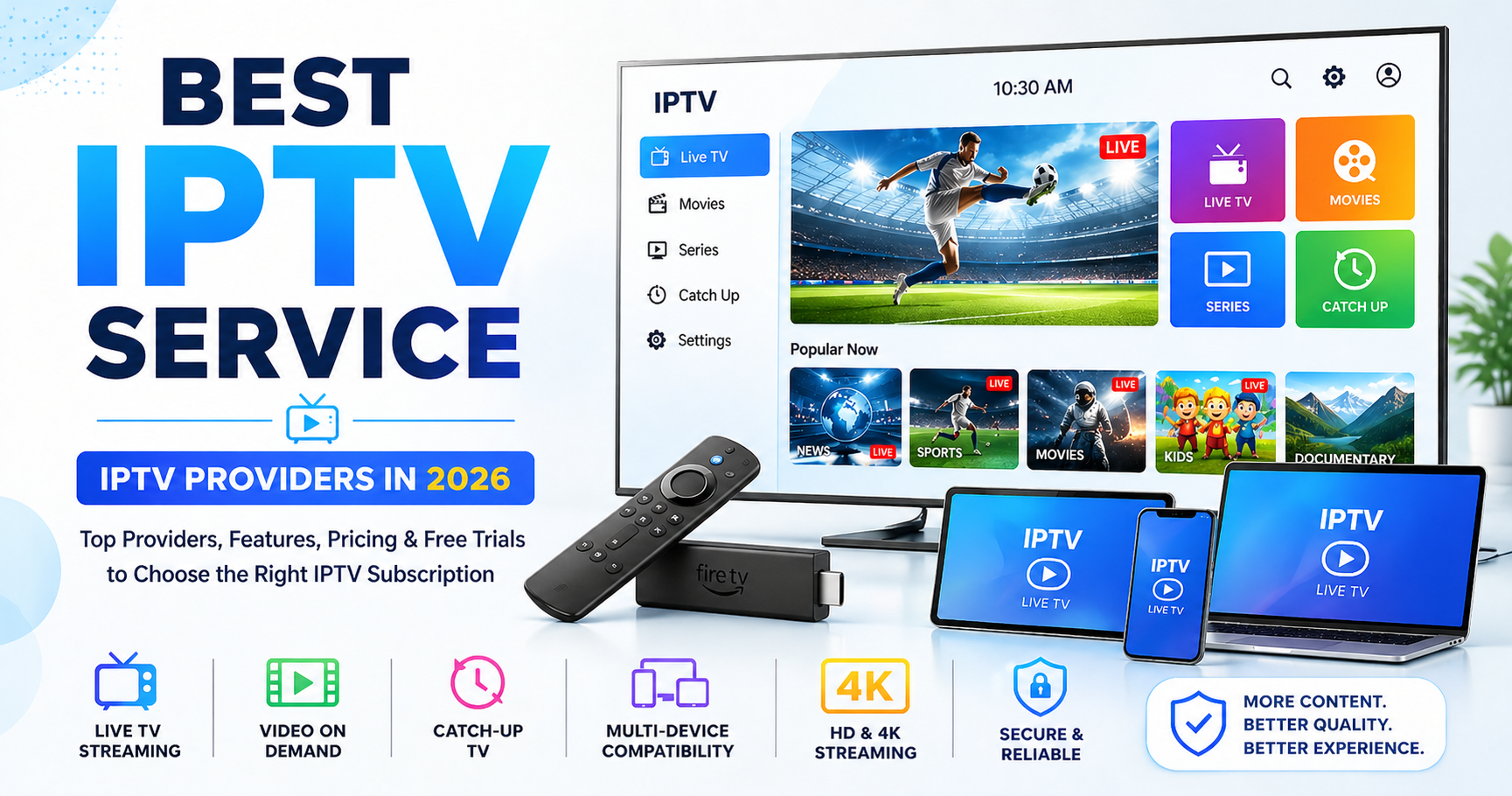
IPTV service delivers live television and on-demand video over an internet connection instead of traditional cable or satellite infrastructure. Rather than receiving broadcast signals through coaxial cable or a satellite dish, your device receives encoded video streams through your broadband connection. This guide explains how IPTV works, what it costs, which provider types exist, and how to evaluate a service before subscribing. We also compare licensed and unverified providers, outline setup requirements, and give you a practical framework for choosing a service that matches your viewing habits and budget.
IPTV has moved from a niche technical curiosity to a mainstream alternative for cord-cutters. The global IPTV market is projected to exceed $100 billion by 2026, driven by consumers who want live sports, international channels, and on-demand libraries without the overhead of legacy cable packages. But the term "IPTV service" covers a wide spectrum—from fully licensed platforms like Hulu + Live TV and YouTube TV to unverified resellers offering thousands of channels for a fraction of the cost. Understanding that spectrum is the first step toward making a safe, cost-effective decision.
iptv service Summary
IPTV service is a broad category of television delivery that uses internet protocol to stream live and on-demand content. Its main proven benefit is cost flexibility: most subscribers pay 50–80% less than traditional cable while gaining access to a wider range of international and niche programming.
| Optimal ForCord-cutters, expats, sports fans, and households seeking multi-device streaming without long-term contracts. | Key AdvantageLive TV plus on-demand library delivered over a single internet connection at a fraction of cable pricing. |
- ✓ Key Strength: Substantial monthly savings compared to cable or satellite—often $600+ per year.
- ✓ Key Strength: Instant activation and multi-device support across Smart TVs, Fire Stick, Android, iOS, and PC.
- ✓ Peace of Mind: Reputable providers offer 24–48 hour free trials and money-back guarantees.
In This Guide
What Is iptv service and How Does It Actually Work?
IPTV stands for Internet Protocol Television. In plain terms, it means television content is delivered using the same internet protocol that powers websites and email, rather than through radio waves, coaxial cable, or satellite signals. A standard IPTV setup involves three components: a content source, an encoding and delivery platform, and a playback device on your end.
There are three primary delivery models within IPTV:
Live television streams channels in real time, just like a traditional broadcast, but over your internet connection. This includes news, sports, and entertainment channels. Time-shifted television lets you watch previously aired programs on demand—often called catch-up TV—and is a standard feature on most IPTV platforms. Video on demand (VOD) gives you access to a library of movies, series, and documentaries that you can start, pause, and resume at any time.
The technical requirements are straightforward. You need a broadband connection with at least 10 Mbps for standard definition, 25 Mbps for HD, and 50 Mbps or higher for 4K streams. Your device—whether a Smart TV, Fire Stick, Android box, phone, or PC—needs to support the provider's app or a compatible IPTV player like TiviMate, IPTV Smarters, or VLC.
One of the most important distinctions is between licensed and unlicensed IPTV providers. Licensed services like Hulu + Live TV, YouTube TV, and Sling TV have negotiated broadcast rights with content owners. Unlicensed services—often advertised in forums and social media—stream channels without proper rights. Subscribing to an unlicensed service carries legal and security risks, including service shutdowns, data exposure, and in rare cases, legal liability. This guide focuses on helping you identify legitimate providers and avoid common pitfalls.
iptv service Pros, Cons, and Data-Driven Comparison
Before committing to any IPTV provider, it helps to weigh the structural advantages and limitations of the technology itself. The table below summarizes the trade-offs.
| Feature / Metric | IPTV Service | Cable TV | Satellite TV | Streaming (Netflix) |
|---|---|---|---|---|
| Delivery Method | Internet Protocol | Coaxial cable | Satellite dish | Internet |
| Monthly Cost Range | $10–$30 | $60–$120 | $70–$130 | $7–$22 |
| Live TV Channels | Yes | Yes | Yes | Limited |
| On-Demand Library | Yes | Limited | Limited | Yes |
| Contract Required | No (most) | 12–24 months | 12–24 months | No |
| Device Flexibility | High | Low | Low | High |
| Setup Complexity | Low | Professional install | Professional install | Low |
The comparison above illustrates why IPTV has become the default choice for cost-conscious viewers. The monthly cost gap is substantial: the average IPTV subscription is roughly 70% cheaper than cable. However, the trade-off is that IPTV quality depends entirely on your internet connection. Cable and satellite deliver consistent quality regardless of network congestion, while IPTV can degrade during peak hours if your broadband plan lacks sufficient bandwidth.
✅ Pros
|
⚠️ Cons
|

Cost-Benefit, Who It's For, and Buyer Considerations
To understand the real value of an IPTV service, calculate your total annual cost. A $25/month IPTV subscription costs $300 per year. A typical cable package at $90/month costs $1,080 per year—plus installation fees, equipment rental, and taxes. The annual savings with IPTV often exceed $700, which is enough to justify upgrading your internet plan if needed.
Who should buy an IPTV service:
- Cord-cutters who want live TV without cable infrastructure.
- Expats and international viewers needing home-country channels.
- Sports fans who want out-of-market games and niche sports packages.
- Budget-conscious households that want to reduce entertainment costs.
- Tech-savvy users comfortable with apps and streaming devices.
Who should avoid IPTV:
- Users with internet speeds below 10 Mbps.
- Those who want guaranteed reliability without any technical troubleshooting.
- Viewers who only watch a few mainstream channels and prefer simplicity.
Red flags to avoid when choosing a provider:
- Unrealistic pricing: If a service offers 10,000+ channels for $5/month, it is almost certainly unlicensed.
- No free trial: Legitimate providers offer at least a 24-hour trial to test compatibility.
- Payment methods: Be cautious of providers that only accept cryptocurrency or wire transfers.
- No customer support: A lack of responsive support is a strong indicator of an unreliable service.
The Bottom Line on Iptv Service
A legitimate IPTV service delivers exceptional value for viewers who want live television, international content, and on-demand libraries without paying cable premiums. If you have a stable internet connection and want to cut your entertainment bill by 50–80%, subscribing to a verified IPTV provider is a sound, low-risk decision.
Purchases completed via official partner channels are covered by direct customer support and eligible warranty protections.
Frequently Asked Questions
What is the difference between IPTV and regular streaming services like Netflix?
Netflix and similar platforms are strictly video-on-demand services—they stream a licensed library of movies and shows. IPTV services deliver live television channels in real time, plus on-demand content, often including international channels, sports packages, and local broadcast stations. IPTV is closer to a cable replacement, while Netflix is a supplement.
Is it legal to use an iptv service in the United States?
Using a licensed IPTV service is completely legal. Using an unlicensed service that streams copyrighted content without authorization is illegal in most jurisdictions, including the United States. The legal risk falls primarily on the provider, but subscribers can face service shutdowns, data exposure, and in rare cases, legal notices. Always verify that a provider holds proper distribution rights.
What internet speed do I need for a reliable iptv service?
Minimum 10 Mbps for standard definition, 25 Mbps for HD, and 50 Mbps or higher for 4K content. You also need a stable connection with low latency. If you share your connection with other household members, add 10 Mbps per simultaneous stream to avoid buffering.
Can I use an iptv service on a Smart TV without a separate box?
Yes. Most legitimate IPTV services provide apps for Samsung, LG, and Android TV platforms. If your Smart TV does not support the provider's app, you can use a streaming device like Amazon Fire Stick, Roku, or Apple TV. Some services also support screen mirroring from a phone or tablet.
How much does a legitimate iptv service cost per month?
Licensed IPTV services range from $15 to $80 per month depending on channel count and features. YouTube TV costs about $73/month, Hulu + Live TV starts around $77/month, and Sling TV starts at $40/month. Smaller licensed providers and international services can cost as little as $10–$20/month.
What should I check before subscribing to an iptv service?
Check three things: licensing and legal status, device compatibility, and trial availability. Read recent user reviews on independent forums, confirm the service supports your streaming device, and test the service during a free trial before committing. Also verify the cancellation policy and whether the provider offers a money-back guarantee.
Do iptv services work with VPNs?
Many IPTV services work with VPNs, but not all. Some licensed platforms use geo-blocking and actively detect VPN traffic, which can cause playback errors. Unlicensed services often require a VPN to avoid detection. If VPN support is important to you, confirm with the provider before subscribing.
What happens if my iptv service stops working mid-subscription?
With a legitimate provider, you can contact customer support and expect a resolution or a prorated refund. With an unlicensed service, you have little recourse—the provider may disappear entirely. This is why paying with a credit card and choosing a provider with a money-back guarantee is essential.
Transparency & Disclosure: We independently evaluate products. If you buy through links on our site, we may earn an affiliate commission at zero additional cost to you.