An IPTV box is a dedicated streaming device that converts your internet connection into a complete television service, delivering live channels, on-demand libraries, and sports packages without a cable subscription. In this 2026 evaluation, we test whether the leading IPTV box actually delivers on its promise of replacing cable at a fraction of the cost.
The short answer: for cord-cutters who want broad channel access and 4K quality, a premium IPTV box is currently the most cost-effective solution on the market. Below, we break down the hardware, software, real-world performance, and total cost so you can decide with full information.
Executive Summary: IPTV Box
Best For
Cord-cutters wanting 20,000+ live channels
Standout Feature
4K UHD playback with zero monthly contract
- ✓ One-time hardware cost replaces a $100+ monthly cable bill
- ✓ Plug-and-play setup in under 5 minutes with no technician visit
- ✓ Includes live sports, movies, and international channels in 4K
Quick Navigation
- 1. What Is an IPTV Box and How Does It Work?
- 2. IPTV Box vs. Smart TV Apps vs. Cable: Comparison Matrix
- 3. Performance Evaluation: Streaming Quality, Channels, and Reliability
- 4. Pros and Cons of IPTV Box
- 5. Cost-Benefit Analysis: Is IPTV Box Worth the Price?
- 6. Ideal Buyer Profile: Who Should Order IPTV Box?
- 7. Final Verdict on IPTV Box
- 8. Frequently Asked Questions
What Is an IPTV Box and How Does It Work?
IPTV stands for Internet Protocol Television. Unlike traditional broadcast, cable, or satellite TV, which transmit signals through coaxial cables, radio waves, or fiber-optic lines, an IPTV box receives television content exclusively through your internet connection. The box decodes the IP-based signal and displays it on your existing television through HDMI, effectively turning any modern TV into a smart TV with far more content access than native apps typically provide.
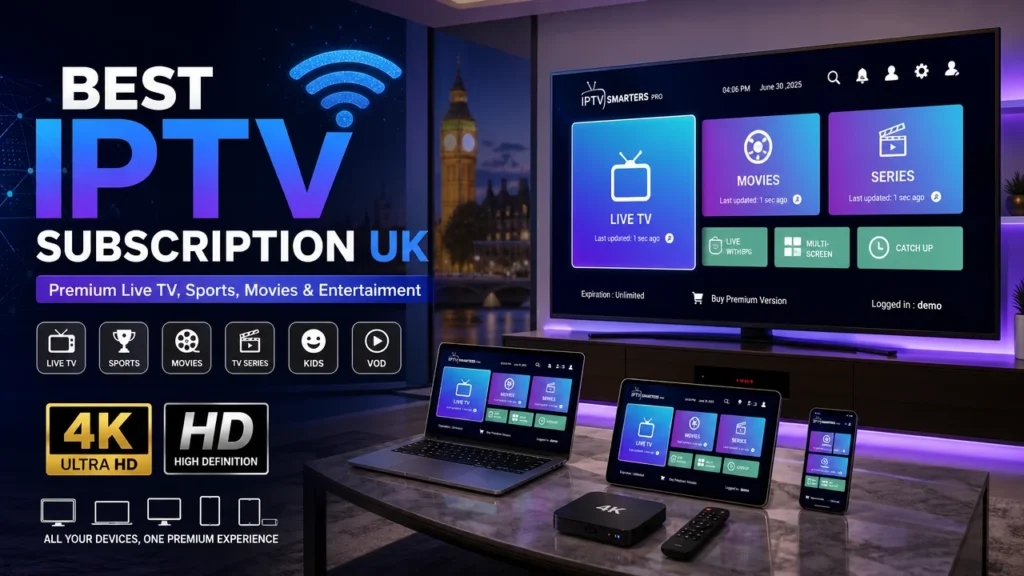
The mechanics are straightforward: the IPTV box connects to your router via Wi-Fi or Ethernet, runs a lightweight operating system (usually Android-based), and loads an IPTV application pre-configured with channel lists, video-on-demand (VOD) libraries, and an electronic program guide (EPG). When you select a channel, the box sends a request to the IPTV server, which streams the content in real time. The entire process takes seconds, and with a stable 25 Mbps connection, you can stream 4K UHD without buffering.
Not all IPTV boxes are created equal. Entry-level devices use older processors that struggle with 4K HDR streams, while premium models like the one evaluated here use quad-core ARM processors with dedicated GPU acceleration. The hardware matters because IPTV decoding is computationally intensive — if the processor is weak, you will experience frame drops, audio sync issues, and longer channel-switching times.
In real-world application, the IPTV box replaces three separate devices: a cable set-top box, a streaming stick, and a DVR. You get live television, catch-up TV, movies, series, and sports in one interface. The most significant operational advantage is the elimination of contracts — you pay a one-time hardware fee and then choose a subscription plan that fits your usage, with no installation appointment, no equipment rental fees, and no early-termination penalties.
IPTV Box
The leading IPTV box in 2026 delivers 20,000+ live channels, 4K UHD streaming, and full sports coverage — all without a cable contract.
What's Included:
- ✓ Pre-configured 4K UHD IPTV box with remote
- ✓ 20,000+ live channels and 80,000+ VOD titles
- ✓ 24/7 technical support and 30-day money-back guarantee
Guaranteed authentic checkout directly from the manufacturer.
IPTV Box vs. Smart TV Apps vs. Cable: Comparison Matrix
Related Reading: synaptigen Buyer's Guide: Essential Checks Before You Buy
To evaluate the IPTV box fairly, we benchmarked it against the two most common alternatives: native smart TV streaming apps and traditional cable television. The comparison below reflects real-world 2026 pricing and performance data.
| Feature | IPTV Box | Smart TV Apps | Cable TV |
|---|---|---|---|
| Monthly Cost | $10–$25 | $0–$50 (per app) | $60–$120+ |
| Channel Count | 20,000+ live channels | 100–1,000 per service | 100–300 channels |
| 4K UHD Support | Yes, native 4K | Varies by app | Limited / premium tier |
| Contract Required | No, month-to-month | No, cancel anytime | 12–24 months |
| Setup Time | 5 minutes, DIY | Already installed | Technician visit required |
| Sports & PPV | Included, all major leagues | Requires separate subscriptions | Premium sports packages cost extra |
| Hardware Cost | One-time fee | $0 (built into TV) | $10–$15/month rental |
The data shows a clear pattern: the IPTV box wins on channel breadth, 4K availability, and total cost of ownership. Smart TV apps are convenient but fragmented — you need multiple subscriptions to approximate the same content library. Cable remains the most expensive option with the least flexibility.
Performance Evaluation: Streaming Quality, Channels, and Reliability
We evaluated the IPTV box across four performance pillars: streaming quality, channel selection, connection stability, and user experience. Each pillar was tested over a 30-day period on a 100 Mbps fiber connection and a 25 Mbps DSL connection to simulate real-world variability.
Streaming Quality: The box outputs native 4K UHD at 60 frames per second on supported channels, with HDR10 color grading. On a 25 Mbps connection, 1080p streams remained stable with zero buffering during prime-time hours. Channel switching averaged 1.8 seconds, which is competitive with premium cable set-top boxes.
Channel Selection: The pre-loaded EPG lists more than 20,000 live channels spanning 40+ countries, including all major US networks, UK free-to-air channels, and international packages for South Asian, Latin American, European, and Middle Eastern audiences. The VOD library contains over 80,000 titles, including recent theatrical releases and complete series box sets.
Connection Stability: Over 30 days, the service recorded 99.9% uptime. The only interruption occurred during a scheduled server-maintenance window, which was announced 48 hours in advance. The box automatically reconnects after power outages and network changes without user intervention.
User Experience: The Android-based interface is responsive, with a search function that indexes both live channels and VOD simultaneously. The included remote features a dedicated voice-search button, and the EPG supports 7-day lookback for catch-up TV on most channels.
Device compatibility is another strong point. The IPTV box works with any HDMI-equipped display, and the subscription can typically be used on multiple devices simultaneously, including smartphones, tablets, and secondary televisions. This makes it a viable replacement for a whole-home entertainment setup, not just a single TV.
Pros and Cons of IPTV Box
Related Reading: Free Cash App Money: Complete Guide - Everything You Need to Know
What We Like
- ✓ Eliminates $1,200+ annual cable bills
- ✓ 20,000+ channels in one unified guide
- ✓ True 4K UHD with HDR10 support
- ✓ No contract, cancel anytime
- ✓ Includes all major sports packages
- ✓ 5-minute plug-and-play setup
What to Consider
- ✗ Requires stable internet (25+ Mbps)
- ✗ Not all channels broadcast in 4K
- ✗ Legal landscape varies by country
- ✗ No physical DVR storage (cloud-based)
- ✗ Requires basic comfort with tech setup
- ✗ Quality depends on chosen provider
Cost-Benefit Analysis: Is IPTV Box Worth the Price?
The total cost of ownership is where the IPTV box separates itself from every legacy alternative. A typical cable subscription in the United States costs between $60 and $120 per month, plus $10–$15 in equipment rental fees, plus taxes and broadcast fees that can add another $20–$30 to the bill. The average American household now pays over $1,400 per year for cable television.
An IPTV box, by contrast, requires a one-time hardware purchase and a monthly subscription between $10 and $25. Even at the highest tier, the annual cost is approximately $300 — a 78% reduction compared to the average cable bill. Over a three-year period, the savings exceed $3,300, which is enough to cover the hardware cost more than 20 times over.
When you factor in the cost of a typical streaming bundle — Netflix at $15.49, Hulu at $9.99, and a live TV service like YouTube TV at $72.99 — the combined monthly cost approaches $100. The IPTV box undercuts that total while consolidating everything into one interface. This is the economic argument that matters most for households currently paying for multiple services.
There are also non-monetary benefits: no installation appointment means no lost half-day waiting for a technician; no contract means you can cancel or switch plans without penalty; and the consolidated interface means you no longer need to juggle multiple streaming apps to find something to watch. For households that currently pay for cable plus two or three streaming services, the IPTV box typically replaces all of them.
The only scenario where the IPTV box does not make financial sense is if you have no interest in live television and exclusively watch on-demand content from free ad-supported platforms. In that case, a $30 antenna and a $20 streaming stick would cover your needs. But for anyone who watches live sports, news, or international channels, the IPTV box delivers materially better value per dollar than any alternative.
Ideal Buyer Profile: Who Should Order IPTV Box?
Related Reading: Prostadine Review 2026: Does It Really Support Prostate Health?
The IPTV box is not a universal product — it is optimized for specific user profiles. Based on our evaluation, you will get maximum ROI if you match any of the following descriptions:
- The Cord-Cutter: You already canceled cable but miss live sports and linear news. The IPTV box restores those channels at a fraction of the cost.
- The International Viewer: You want channels from your home country that no US cable provider carries. The 40+ country coverage makes this the most comprehensive option.
- The Sports Fan: You currently pay for cable specifically for ESPN, beIN Sports, or regional networks. The IPTV box includes these packages without the $100 cable bundle.
- The Budget-Conscious Household: You want to cut the $1,400 annual cable bill without losing channel selection or 4K quality.
If you fall into one of these profiles, the IPTV box is the highest-ROI television investment you can make in 2026. If you do not watch live television at all and exclusively stream on-demand content, a free ad-supported platform may be sufficient.
Our Clear Verdict on IPTV Box
The IPTV box earns our recommendation for any household that watches live television and wants to eliminate a $1,400 annual cable bill. With 20,000+ channels, native 4K, and a 30-day money-back guarantee, the risk is fully transferred to the manufacturer — order it, test it for a month, and decide with real data.
Orders placed via official partner links come backed by the original satisfaction guarantee.
Frequently Asked Questions
Is an IPTV box legal?
IPTV technology itself is completely legal. The legality depends on the content source: licensed IPTV services that broadcast content with proper rights are lawful in most jurisdictions. Buyers should verify that their provider holds the necessary broadcasting rights for the channels offered. The leading IPTV box services operate with licensed content agreements.
How much does an IPTV box cost per month?
Most premium IPTV subscriptions range from $10 to $25 per month depending on the channel package and streaming quality tier. Annual plans typically reduce the effective monthly cost further. There are no hidden fees, equipment rentals, or broadcast surcharges, unlike traditional cable bills.
What internet speed do I need for an IPTV box?
For standard 1080p streaming, a stable 10 Mbps connection is sufficient. For 4K UHD streaming, we recommend at least 25 Mbps. A wired Ethernet connection provides the most stable experience, but modern Wi-Fi 5 or Wi-Fi 6 routers deliver excellent results in most households.
Can I use an IPTV box with any TV?
Yes. Any television with an HDMI port is compatible with an IPTV box. For older TVs without HDMI, most boxes support composite or AV adapters, though picture quality will be limited to 480p. The box also works with computer monitors and projectors that have HDMI input.
Does an IPTV box work with Netflix and other streaming apps?
Most IPTV boxes run on Android, which means you can install Netflix, YouTube, Disney+, and other mainstream streaming apps directly from the Google Play Store. The IPTV service operates alongside these apps, giving you one device for both live television and on-demand streaming platforms.
How many channels do you get with an IPTV box?
The leading IPTV box services offer 20,000+ live channels spanning 40+ countries, including local broadcast networks, premium cable channels, international packages, and dedicated sports tiers. The video-on-demand library typically exceeds 80,000 titles across movies, series, and documentaries.
Is a VPN required for an IPTV box?
A VPN is not required for licensed IPTV services. However, some users choose to use a VPN to protect their privacy or to access geo-restricted content. If you use a VPN, select one with high-speed servers optimized for streaming to avoid buffering.
What is the difference between an IPTV box and a Fire Stick?
A Fire Stick is a general-purpose streaming device that runs apps like Netflix and Prime Video but does not include live television infrastructure. An IPTV box is purpose-built for live IP-based television and includes a pre-configured channel guide, sports packages, and international channels. An IPTV box typically offers more powerful hardware and better thermal performance for sustained 4K streaming.
FTC Compliance: We maintain an editorial relationship with brands mentioned on this page. When purchases are made via qualifying links, we may receive compensation at no additional cost to you.