Analysis by Mark R. · Reviewed 2026-07-07 · 12 min read
If you are tired of rising cable bills, rigid contracts, and channel bundles you never watch, you have likely searched for a better way to watch live television. An IPTV box is exactly the hardware solution that delivers live TV, on-demand movies, and sports channels over your home internet connection instead of traditional cable or satellite infrastructure.
This complete guide explains what an IPTV box actually does, how to set one up, and whether it makes sense for your household. We cover the honest limitations, compare it directly against alternatives like Firestick and Android TV boxes, and walk through the setup process step by step. By the end, you will know exactly what to buy and how to get started watching live sports and international channels within minutes.
Whether you want the best IPTV box for live sports, a cheap IPTV box with WiFi for a second TV, or a 4K IPTV box for the main living room, you are in the right place. Let us start with the fundamentals.
What Is an IPTV Box Exactly?
An IPTV box is a dedicated streaming device that connects to your television via HDMI and receives television channels and video content through Internet Protocol (IP) rather than traditional broadcast methods like satellite dishes, antennas, or coaxial cables. The acronym stands for Internet Protocol Television.
Think of it as a specialized computer that runs an operating system — usually Android — loaded with IPTV player apps. These apps read playlist files (M3U format) or connect directly to IPTV subscription services to decode and display hundreds or thousands of live channels, movies, and series.
Unlike a standard smart TV that comes with pre-installed apps like Netflix or YouTube, an IPTV box gives you full flexibility to install any third-party application. This means you can configure it for live sports, international news, premium movie channels, and niche content that traditional cable packages simply do not offer.
The hardware inside a typical IPTV box includes a processor, RAM (usually 2GB to 4GB), internal storage (8GB to 64GB), WiFi and Ethernet connectivity, and a dedicated GPU for video decoding. Higher-end models support 4K resolution at 60 frames per second with HDR10, making them suitable for modern large-screen televisions.
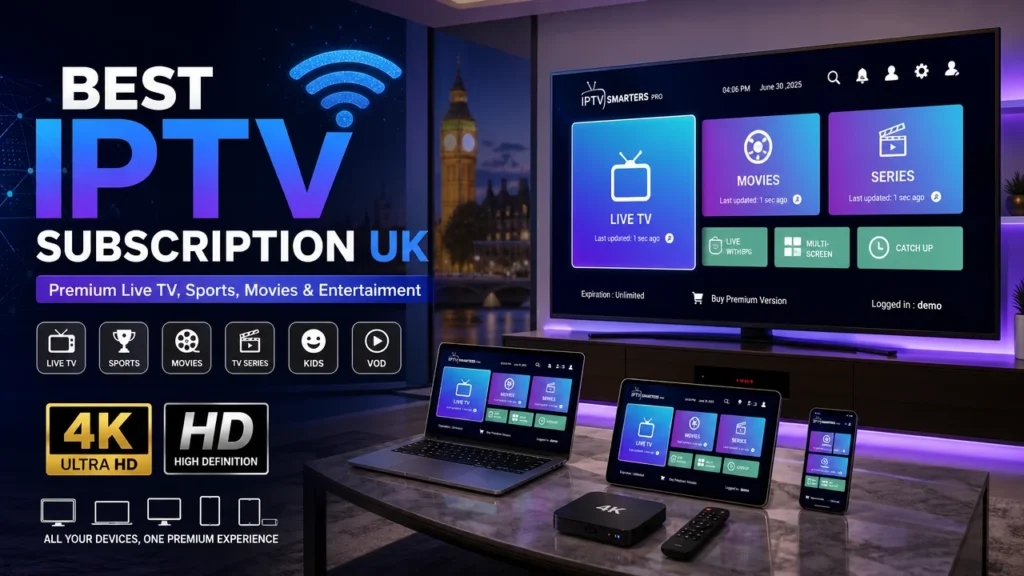
How Does an IPTV Box Work Step by Step?
Understanding the technical flow helps you troubleshoot issues later. Here is exactly what happens when you press a button on the remote:
Step 1: You connect the IPTV box to your router via Ethernet cable or WiFi. The box requests an IP address from your home network, just like any other internet-connected device.
Step 2: You install an IPTV player app — popular options include TiviMate, IPTV Smarters Pro, and XCIPTV Player. These apps are available through the Google Play Store or can be sideloaded as APK files.
Step 3: You enter the subscription details provided by your IPTV service. This usually comes as a URL link (M3U playlist), a username and password combination, or a portal URL for Xtream Codes systems.
Step 4: The player app connects to the IPTV server, downloads the channel list and electronic program guide (EPG) data, and displays them in a user-friendly interface organized by category.
Step 5: When you select a channel, the box sends a request to the server, which streams the video in small data packets. The box buffers a few seconds of content, then decodes and renders the video on your screen at the selected resolution.
The entire process happens in real time, and with a stable internet connection of at least 25 Mbps for 4K content, you will experience minimal buffering and smooth playback.
Concrete Benefits of Using an IPTV Box
Related Reading: How to Get an iptv subscription uk - Quick Start for Beginners
Users choose IPTV boxes for specific, measurable advantages over traditional cable and even other streaming devices. Here are the real-world benefits:
Cost savings compared to cable. Monthly IPTV subscription fees range from $10 to $30, while traditional cable packages average $100 to $200 per month. Over a year, you save between $800 and $2,000. An IPTV box subscription no contract structure means you can cancel or pause anytime without penalties.
Channel count and variety. A single IPTV subscription can provide 10,000 to 20,000 live channels covering every major sport league, international news from dozens of countries, movies, kids content, and adult programming. No cable package comes close to this breadth.
Multi-device and multi-TV support. Many subscription plans let you connect multiple devices with one account. You can use an IPTV box for multiple TVs throughout your home, plus watch on your phone or tablet when away from home.
4K resolution and HDR. A good 4K IPTV box review will confirm that streaming at 2160p with HDR color depth looks superior to standard cable broadcast, which is often limited to 1080i.
No long-term commitments. Unlike satellite or cable contracts that lock you in for 12 to 24 months, IPTV services typically offer monthly, quarterly, or annual plans with no contracts. You pay for what you use and leave when you want.
Honest Limitations You Need to Know
Pros
- Significantly lower monthly cost than cable
- Access to thousands of international channels
- No long-term contract commitments
- Works on multiple TVs in the same home
- 4K HDR video quality available
- Flexible app-based interface
Cons
- Requires reliable high-speed internet
- Some services operate in legal gray areas
- Channel stability depends on provider quality
- Initial setup requires technical steps
- Electronic program guide may be incomplete
- Customer support varies widely by provider
The single biggest limitation is your internet connection. If your ISP imposes data caps or your connection drops frequently, an IPTV box will deliver a frustrating experience. Always check your actual download speed and latency before investing in hardware and a subscription. Additionally, not all IPTV services have proper licensing for the channels they offer, which introduces legal and service-discontinuation risks.
iptv box
Review live stock availability, promotional bundle milestones, and open checkout routes.
BUY NOW →IPTV Box vs. Firestick vs. Android TV Box: Comparison
Related Reading: Comparing IPTV Subscription Services: Which One Is Right for You?
| Feature | IPTV Box | Amazon Firestick | Android TV Box |
|---|---|---|---|
| Purpose-built for IPTV | Yes | No (general streaming) | Partial |
| 4K support | Yes, most models | Yes (4K Max version) | Depends on chipset |
| RAM typical | 2GB - 4GB | 1.5GB - 2GB | 2GB - 8GB |
| Storage | 16GB - 64GB | 8GB | 16GB - 128GB |
| Ethernet port | Yes (most) | No (requires adapter) | Yes (most) |
| Sideload apps easily | Yes | Restricted | Yes |
| Price range | $40 - $120 | $30 - $60 | $40 - $200 |
| Best for live sports | Excellent | Good | Good |
An IPTV box vs Firestick comparison often reveals that while Firesticks are more popular for mainstream apps like Netflix and Prime Video, dedicated IPTV boxes offer superior hardware for handling thousands of live channels, better Ethernet connectivity for stable streaming, and more storage for app data and recordings. If your primary use case is live television, an IPTV box is the better tool for the job.
Who Is an IPTV Box Best For?
Not everyone needs an IPTV box. Here are the user profiles that benefit most:
Sports enthusiasts. If you follow multiple leagues — English Premier League, NFL, NBA, Champions League, UFC — an IPTV box gives you access to channels like Sky Sports, ESPN, BeIN Sports, and DAZN at a fraction of the cable price. The best IPTV box for live sports is one with a fast processor and at least 3GB of RAM to handle high-bitrate streams.
Expatriates and international viewers. People living outside their home country often struggle to find local channels. An IPTV box with a global channel list delivers news, entertainment, and sports from your home country instantly.
Cord-cutters wanting total control. If you have already cancelled cable but miss live television, an IPTV box bridges the gap between on-demand streaming and live channels without committing to another traditional provider.
Users with multiple televisions. Instead of buying multiple cable boxes at $15 each per month, you can install an IPTV box on every TV in your house with a single subscription that allows multiple concurrent connections.
Tech-savvy users comfortable with setup. If you enjoy tweaking settings, installing apps from outside official stores, and troubleshooting occasional connectivity issues, you will get the most out of an IPTV box.
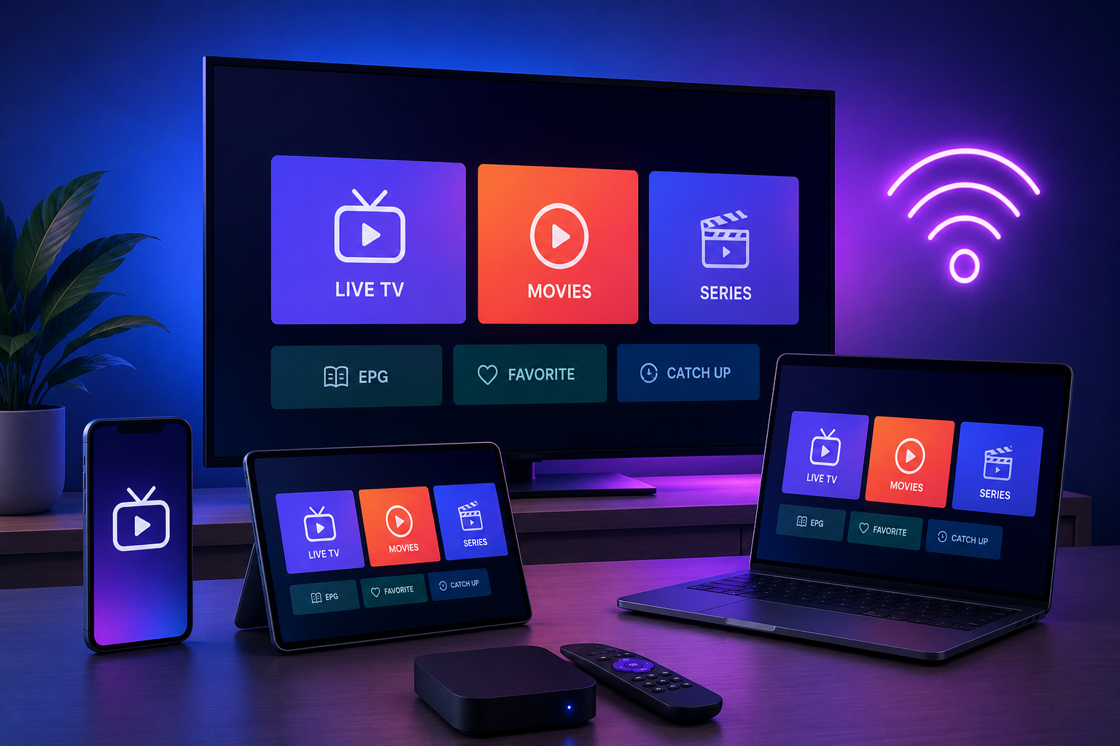
How to Get Started: Practical Setup Guide
Related Reading: Exploring the iptv free trial: Genuine User Experience Revealed
Follow these numbered steps to set up your IPTV box correctly the first time. You will need the hardware, an HDMI cable, your WiFi password, and your IPTV subscription credentials.
- Unbox and connect hardware. Plug the IPTV box into your TV using the included HDMI cable. Connect the power adapter. Insert any batteries in the remote control. If available, connect an Ethernet cable from the box to your router for the most stable connection.
- Complete initial Android setup. Turn on the TV and select the correct HDMI input. The box will boot into Android setup mode. Connect to your WiFi network (Settings > Network > WiFi). Sign into a Google account or skip this step if you plan to sideload apps.
- Install an IPTV player app. Open the Google Play Store and search for TiviMate, IPTV Smarters Pro, or your preferred player. Install the app. If your app is not in the Play Store, enable "Unknown Sources" in Developer Options and sideload the APK using a USB drive or file transfer app.
- Enter your subscription details. Open the player app. Select "Add Playlist" or "Login." Enter the M3U URL, Xtream Codes portal, or username/password provided by your IPTV service. The app will load and organize your channel list.
- Configure the electronic program guide (EPG). Most player apps let you add an EPG source URL for a TV guide overlay. Enter the EPG URL from your provider or a third-party service. This gives you show schedules, descriptions, and reminders.
- Test your stream. Select a live channel, preferably a sports channel from the best IPTV box for live sports category, and verify the stream plays smoothly. Test at different times of day to assess performance.
- Adjust video and audio settings. Go to Settings within the player app and set resolution to match your TV (1080p or 4K). Enable hardware decoding if available. Adjust audio output to Passthrough if using a soundbar or A/V receiver.
- Secure your connection. For privacy and to bypass potential ISP throttling of streaming traffic, consider using a VPN. Install a VPN app from the Play Store, connect to a server, then launch your IPTV player.
After completing these steps, you should have a fully functional IPTV system. Spend some time exploring the channel list, adding favorite channels, and setting up catch-up TV or recording features if your player and subscription support them.
Where to Buy an IPTV Box and Subscription
You have two purchasing decisions: hardware and subscription. For hardware, you can buy from major online retailers like Amazon, AliExpress, or directly from manufacturer websites. Look for models with at least 2GB RAM, Android 10 or newer, and 4K support.
For subscriptions, avoid making a snap decision. Research providers thoroughly by reading recent user reviews on forums like Reddit (r/IPTV) and Trustpilot. Many services offer 24-hour free trials — always test before paying for a longer plan. A cheap IPTV box with WiFi paired with a well-reviewed subscription gives you the best value.
The most critical factor is finding a subscription that matches your channel requirements. If you primarily want sports, confirm that the provider carries the specific leagues and channels you need before purchasing.
⚠️ Limited Inventory Notice: Examine structural specifications, direct manufacturing packages, and instant priority shipping paths.
CLAIM SPECIAL OFFER →Frequently Asked Questions
What is the best IPTV box for live sports streaming in 2026?
The best IPTV box for live sports has a fast processor (S905X4 or better), at least 3GB of RAM, and support for 4K at 60fps. Models like the Formuler Z11 and BuzzTV XRS4900 are popular for sports due to their reliable WiFi chips and Ethernet ports. The key is matching the hardware to your internet speed — a 50 Mbps connection with a mid-range box delivers smooth 4K sports without buffering.
How do I set up an IPTV box step by step?
Setting up an IPTV box involves connecting the hardware via HDMI, booting into the Android operating system, connecting to WiFi or Ethernet, installing an IPTV player app like TiviMate or IPTV Smarters Pro, and entering your subscription credentials. The full process takes about 15 to 20 minutes. Most providers include a quick start guide, but the general steps remain consistent across devices.
What is the difference between IPTV box vs Firestick?
The main difference is hardware capability and ecosystem restrictions. An IPTV box typically has more RAM, more storage, a dedicated Ethernet port, and is optimized for live television streaming. Firesticks are general-purpose streaming devices with Amazon's restrictive operating system that limits sideloading apps. For heavy IPTV use, dedicated boxes perform better, especially for high-bitrate sports channels and multi-room setups.
Where can I buy a reliable IPTV box and subscription together?
You can buy hardware from major online marketplaces like Amazon or directly from manufacturers. Subscriptions are typically sold separately by IPTV service providers. Many users prefer buying a pre-configured bundle from a single vendor to ensure compatibility, but this limits your ability to choose the best subscription for your needs. Always test a subscription with a free trial before committing to a bundle.
Can I get an IPTV box subscription with no contract?
Yes, the overwhelming majority of IPTV services offer monthly subscriptions with no long-term contracts. You pay for one month at a time, and you can cancel at any point without penalties. Some providers offer discounts for purchasing 3, 6, or 12-month plans, but these are optional. Always choose a no-contract option when starting to minimize financial risk if the service does not meet your expectations.
Is a 4K IPTV box worth the extra cost in 2026?
A 4K IPTV box is worth the investment if you have a 4K television and a stable internet connection of at least 25 Mbps. Most premium sports channels and movie content now stream in 4K, and the visual difference on a 55-inch or larger screen is significant. Many 4K IPTV box reviews note that models with HDR10+ support deliver richer colors and better contrast for sports broadcasts.
Can I use one IPTV box for multiple TVs in my house?
One physical IPTV box connects to one TV via HDMI. To watch on multiple TVs, you need either one box per television or you can use a subscription that allows multiple concurrent connections. Most providers offer plans supporting 2 to 5 simultaneous streams. You install the IPTV player app on each box or compatible device and log in with the same subscription credentials.
What is a cheap IPTV box with WiFi that still works well?
Budget-friendly options like the MXQ Pro 4K and H96 Max series cost between $35 and $50 and include dual-band WiFi, 2GB RAM, and Android 11. While they lack the premium build quality of higher-end models, they perform adequately for standard definition and 1080p streaming. For 4K content, expect occasional buffering. These are best suited for secondary TVs or users with moderate channel requirements.